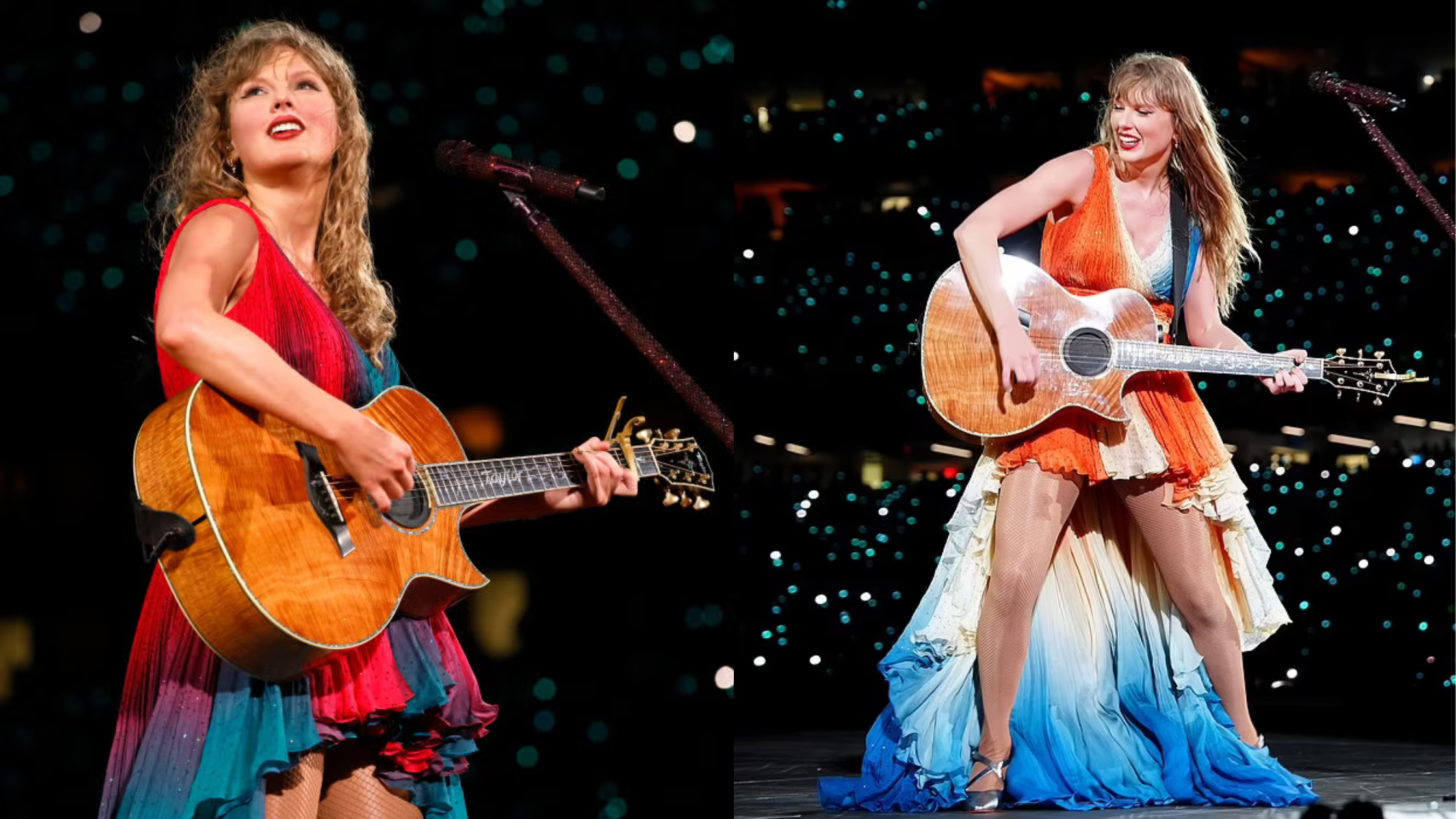
One of the most interesting fashion moments in The End of an Era docuseries about Taylor Swift’s Eras Tour has nothing to do with a silhouette, a fabric, or a trend forecast.
It’s Velcro.
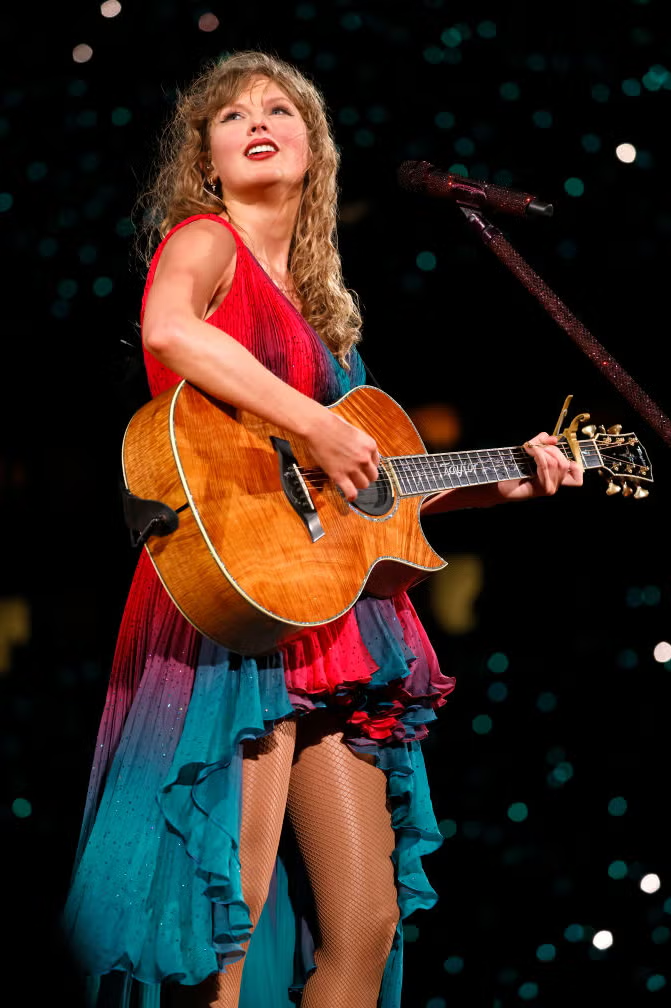
In the documentary, Taylor Swift’s longtime stylist, Joseph Cassell, casually explains how she changes into her acoustic-set dress in the dark backstage. As he demonstrates, he rips open the front of the dress in one concise motion, looks at the camera, and says: “The magic of Velcro.”
The moment is quick. Almost throwaway.
But it says everything.
Adaptive design, hiding in plain sight
The dress, worn during Swift’s acoustic set, was created by Roberto Cavalli, one of the most recognizable fashion houses in the world. It was designed for one of the biggest stages on the planet, worn by one of the most visible artists alive.
AND it just so happened to use an adaptive feature that many people around the world would benefit from having in their own clothing
This matters.
Adaptive and universal design are still widely treated as compromises. Functional, yes, but rarely aspirational. Practical, but often stripped of personality. Designed with aging or illness in mind, not glamour or performance.
And yet here it was, front and center, working exactly as intended.
From stadium logistics to real-life accessibility
Quick costume changes are one reason Velcro makes sense for a stadium tour of this scale. But that same design logic applies directly to everyday life.
For people with dexterity limitations, limb differences, chronic pain, or limited grip strength, Velcro can be the difference between independence and needing help getting dressed. It can mean autonomy. Privacy. Control over one’s own body and presentation.
What’s striking is how casually this solution is treated in the documentary. No explanation. No justification. No framing it as “adaptive.” Just a tool that works.
That’s the point.
Why adaptive fashion still feels clinical
Despite moments like this, adaptive fashion is still overwhelmingly marketed as clinical or utilitarian. It often prioritizes function at the expense of self-expression, as if disabled people are not also consumers of style, art, and identity.
Function is important. But function does not have to be joyless.
The Eras Tour quietly proves that accessibility does not dilute design. When adaptive elements are integrated from the start, they disappear into the artistry. They become part of the magic rather than something to explain away.
2025 READS
Here is a list of everything I’ve read so far this year!

Accessibility as a design opportunity
If Velcro belongs on a Roberto Cavalli dress worn by Taylor Swift, it belongs everywhere.
Adaptive design can be functional and beautiful.
Universal design can be practical and stylish.

These are not opposing goals.
What The End of an Era shows us, whether intentionally or not, is what happens when accessibility is treated as a design opportunity instead of an afterthought.
This is the kind of thinking that continues to shape my work around accessibility, representation, and inclusive design across industries.
Accessibility and artistry do not have to be at odds. When they meet, they create something far more powerful than either could alone.